Chancenkarte Job Applications: What Your CV Needs to Show
Applying for jobs in Germany on a Chancenkarte? The rules for points, language proof and work, and how to build a CV and application that supports your job search.

DeutschCV Team
The team behind DeutschCV

On this page
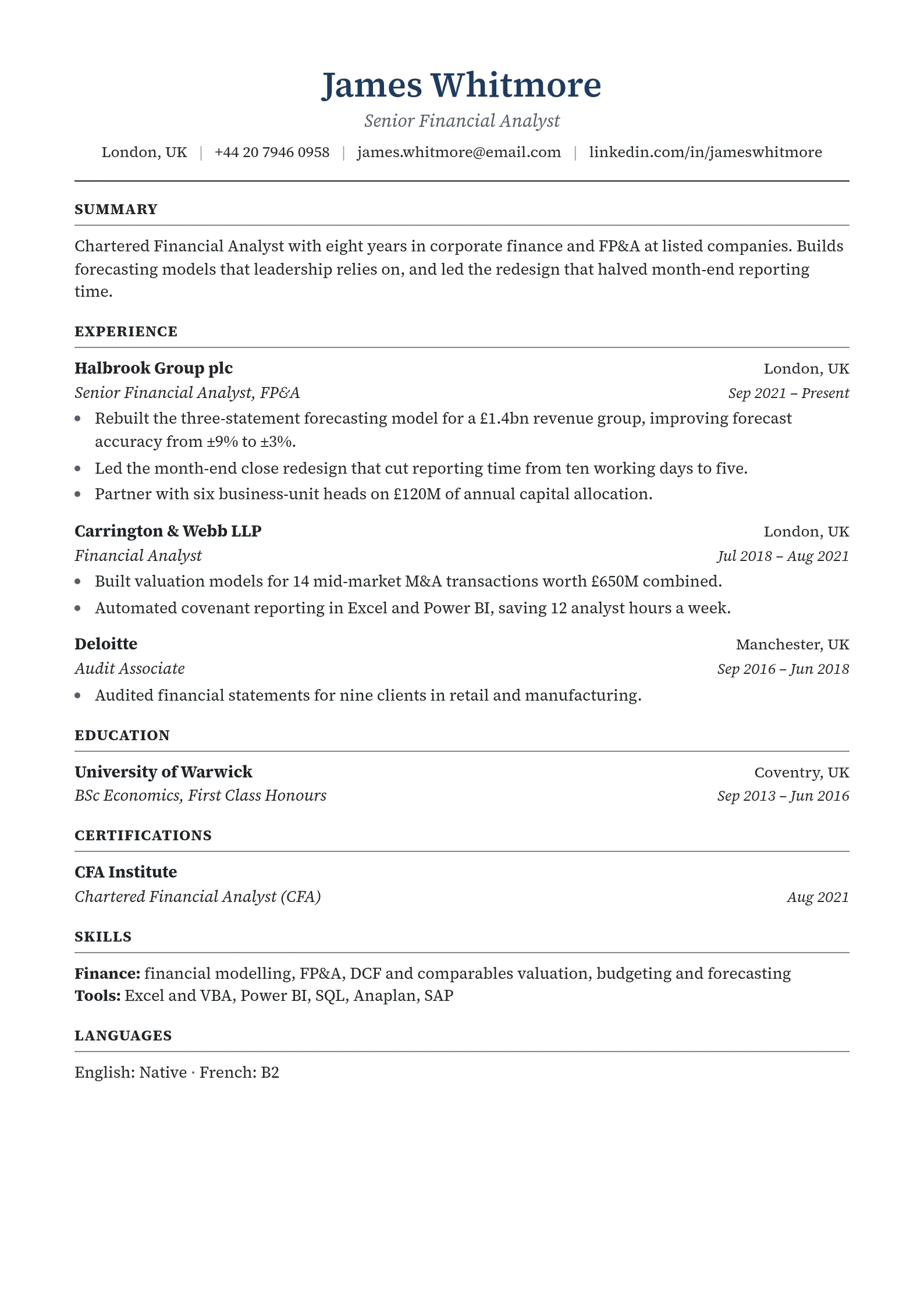
Turn your CV into a Lebenslauf
- Free Germany check
- Lebenslauf and Anschreiben
- One-PDF Bewerbungsmappe
No account needed
You have the Chancenkarte, or you are about to apply for one. You have a limited time in Germany to find work, and every application counts. The rules around the card are about residence and points. The job search itself still runs on a German CV, an Anschreiben and a Bewerbungsmappe.
This post covers both halves: what the Chancenkarte requires, according to official pages, and how to present yourself to an employer while you hold it. It is not legal advice. Rules change, so check the official sources linked below before you apply.
TL;DR: The Chancenkarte (Opportunity Card) is a residence permit for looking for work. You qualify as a recognised professional or through a points system with a minimum of 6 points. While you search, you may work up to 20 hours a week and do trial employment of up to two weeks. Your CV should make your qualification, language level and experience easy to verify.
What is the Chancenkarte?
The Chancenkarte is a residence permit for a job search in Germany. The statute, § 20a of the Residence Act (Aufenthaltsgesetz), describes it as a permit for seeking work or for measures to have a foreign professional qualification recognised (§ 20a AufenthG). The German Federal Foreign Office embassy pages describe the visa as valid for up to 12 months (German embassy Phnom Penh, Opportunity Card).
Two ways to qualify
According to the embassy page, there are two routes:
- Recognised professionals. Your foreign qualification is fully recognised in Germany, and you can finance your stay.
- Points system. You need all four of: a university degree or at least two years of vocational training; German at A1 or English at B2; independent financing of your stay; and at least 6 points.
The points table on the same page:
| Criterion | Points |
|---|---|
| Partial recognition of your qualification in Germany | 4 |
| German language, B2 / B1 / A2 | 3 / 2 / 1 |
| English language, C1 | 1 |
| Professional experience in the field: 5 years within the last 7 / 2 years within the last 5 | 3 / 2 |
| Qualification in a shortage occupation | 1 |
| Age: under 35 / 35 to 40 | 2 / 1 |
| Six months of uninterrupted stay in Germany within the last 5 years | 1 |
| Spouse applying together who has achieved at least 6 points | 1 |
The law behind the table is § 20b of the Residence Act, which lists the same kinds of criteria and sets the minimum in an annex (§ 20b AufenthG). The values can change, so use the current official table, not a blog post, to count your points.
Two caveats on the table. First, the qualification has to be recognised: § 20a speaks of a state-recognised foreign university degree or a recognised vocational qualification, and the embassy page asks for confirmation that vocational training is recognised in the country where you acquired it (the ZAB confirmation). Second, the point for a prior stay is for lawful, continuous residence of six months within the last five years, according to § 20b. The embassy page lists proof such as employment contracts, rental contracts, old visas or proof of studies. It does not say whether a short visit counts, so ask the embassy before you count that point.
Language certificates for the points route must come from an ALTE-certified language school, according to the embassy page, and be no older than one year.
What you may do while you hold it
Under § 20a, a Chancenkarte holder may work in a job averaging up to 20 hours per week, and may do trial employment of up to two weeks at a time (the law adds conditions on the type of work). The embassy page repeats both limits: part-time work up to 20 hours per calendar week and trial employment of a maximum of two working weeks at a time.
The first card runs for up to a year. The statute allows an extension of up to two more years if you hold a work contract or binding job offer for qualified work and the Federal Employment Agency agrees. Details can change, so check them with the immigration office.
Why your CV matters more on a Chancenkarte
The clock is a reason to apply efficiently. A German hiring manager sees you for the first time through the application, and a few details reduce questions:
- Your qualification should be legible. Put the degree or training with institution, country and dates in the table. If recognition is in progress, say so in one line. The federal portal Anerkennung in Deutschland explains how recognition works.
- Your language level should be a CEFR level. The same levels the points table uses. See CEFR levels on your CV.
- Your residence status should be clear. An employer wants to know whether they can hire you. A line in the personal details such as "Residence status: Chancenkarte, valid until 06/2027" answers the question before it is asked. Only include what is accurate and current.
- Your experience should be dated by month and year, because points for experience depend on duration. See the German CV format guide.
A residence-status line that works
Put it in the personal details of your Lebenslauf, near the nationality line if you include one:
Aufenthaltsstatus: Chancenkarte (§ 20a AufenthG), gültig bis 06/2027
Arbeitserlaubnis: Teilzeit bis 20 Std./Woche, Probebeschäftigung möglich
Check the exact wording on your own permit. The limits above come from § 20a, but your own card is the document that counts. Let a reader see the status in one glance, and offer proof when asked.
Using the 20-hour allowance in your application
The 20-hour allowance changes the sentence in your Anschreiben that deals with availability. Compare:
Vague:
I am looking for any opportunity in Germany.
Specific:
Ich bin mit einer Chancenkarte in Deutschland, darf bis zu 20 Stunden pro Woche arbeiten und könnte nach einer Probebeschäftigung in Vollzeit starten, sobald der passende Aufenthaltstitel erteilt ist.
(Translation: I am in Germany on a Chancenkarte, may work up to 20 hours a week, and could start full-time as soon as the right residence permit is granted.)
That tells the employer what they may offer you today and what comes after. Which permit applies once you have a job offer is a question for the immigration office, not for the letter.
A realistic application plan
- Week 1. Convert your CV into a Lebenslauf. Fix dates, add language levels and your status line.
- Week 1. Gather your documents in one folder: degree certificates, employer references, language certificates.
- Weeks 2 and onward. For each job, write a new Anschreiben that mirrors the ad. See how to write an Anschreiben.
- Before sending. Build the Bewerbungsmappe as one PDF.
- Keep a log. Note the date, company and reference number, so you can follow up.
DeutschCV is built for this sequence, and the Chancenkarte application page shows how the pieces fit together.
Other routes you might hear about
Applicants with a university degree and a job offer may also be eligible for the EU Blue Card. Its salary thresholds change every year, so look at the official Make it in Germany pages instead of relying on a number from a blog post. A Chancenkarte holder who finds qualified work can ask the immigration office which permit applies.
Frequently Asked Questions
How many points do I need for the Chancenkarte?
The German embassy page for the Opportunity Card states a minimum of 6 points under the points system. Recognised professionals do not need points. Always check the current table before you apply.
How many hours can I work on a Chancenkarte?
Under § 20a of the Residence Act, a holder may work in a job averaging up to 20 hours per week and may do trial employment of up to two weeks at a time.
How long is a Chancenkarte valid?
The initial card is valid for up to one year according to § 20a and the embassy page. An extension is possible in defined cases, for example with a work contract or binding job offer for qualified work.
Should I mention my Chancenkarte on my CV?
It helps. A short line on your residence status and work permission answers the first question an employer has. Keep it accurate and match the wording on your permit.
Sources
- § 20a AufenthG (Chancenkarte), gesetze-im-internet.de: purpose, 20 hours, two-week trial employment, duration and extension.
- § 20b AufenthG, gesetze-im-internet.de: the criteria of the points system.
- German embassy Phnom Penh, Opportunity Card (Federal Foreign Office): two routes, points table, language proof rules, 12 months, 20 hours.
- Anerkennung in Deutschland: recognition of foreign professional qualifications.
- Make it in Germany: the federal portal's Opportunity Card and EU Blue Card pages. Read it for the current requirements.
DeutschCV Team
The team behind DeutschCV
The team that builds DeutschCV's Lebenslauf templates, the Germany check and the Anschreiben writer..
Applying in Germany? Start with your CV.
See how ready your CV is for German employers, then turn it into a Lebenslauf and an Anschreiben.
- AI-Powered Writing
- German format
- Free to Build
No card needed. Your first PDF or Word download is free; passes start from 19 €, one payment, no auto-renew.
Continue Reading
View all articles
Bewerbungsmappe Checklist: What Goes in a German Job Application

CEFR Levels on Your CV: How to List German and English Skills

Photo and Date of Birth on a German CV: Required or Optional?

How to Write a German Cover Letter (Anschreiben) Step by Step
